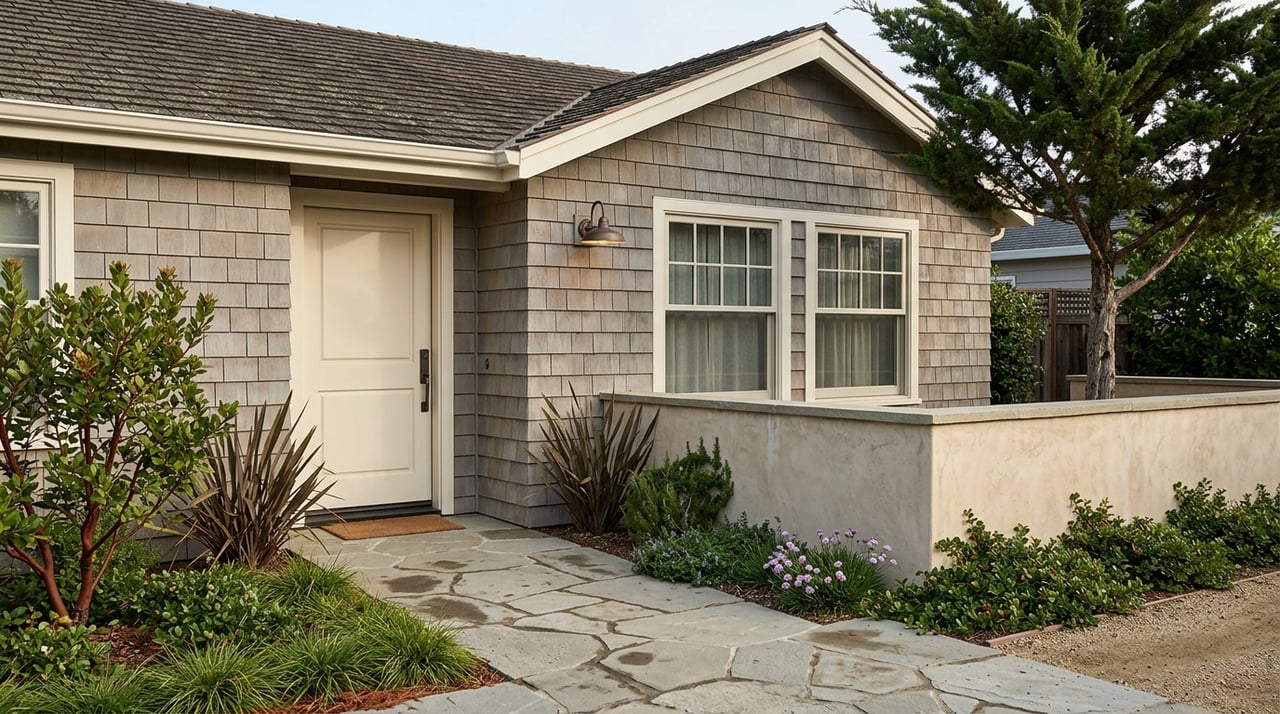
If you are preparing to sell in Carmel-by-the-Sea, curb appeal is not just about looking polished. It is about making your home feel like it belongs to the coast, the forest, and the architectural rhythm of the village. In a place shaped by fog, salt air, muted light, and historic character, the best exterior updates are often the quiet ones. This guide walks you through what tends to show well in Carmel-by-the-Sea, what to refresh before listing, and what to approach carefully. Let’s dive in.
Why curb appeal works differently here
Carmel-by-the-Sea has a distinct coastal setting, and that changes how buyers experience a home from the street. City planning materials describe a maritime Mediterranean climate with moderate temperatures, frequent fog, and seasonal rainfall, while nearby NOAA normals for Monterey show mild temperatures and rainfall concentrated in winter, with very little in summer. The area also regularly experiences a marine layer with cool, moist onshore winds and low clouds, especially in summer, according to the City of Carmel strategic planning materials.
That climate creates a softer, more weathered visual environment than you see in many inland markets. Crisp, glossy, high-contrast updates can feel out of place here, while natural textures and restrained finishes often feel more aligned with the setting. If you are selling, your goal is not to make the home look louder. It is to make it look settled, cared for, and naturally connected to Carmel.
Match Carmel’s village character
Carmel’s appeal is tied to its architecture and landscape working together. The city’s historic context statement describes a consistent local vocabulary that includes cottages, Craftsman, Tudor Revival, Spanish Colonial Revival, shingle influences, and the well-known Fairy Tale cottage tradition.
Across those styles, certain materials and details show up again and again. Stucco, shingles, Carmel stone, red tile, carved wood, half-timbering, exposed rafters, patios, and courtyards all support the layered, handcrafted look that buyers associate with Carmel. Landscaping matters just as much. Gardens, trees, courtyards, window boxes, and informal planted areas are part of the visual identity.
That means the strongest first impression usually comes from compatibility, not reinvention. Buyers tend to respond best when a home feels true to its setting, with exterior details that support the architecture instead of competing with it.
Start with the highest-impact refreshes
If you want to improve curb appeal before listing, focus first on the updates that are visible, low-risk, and consistent with local design guidance.
Refresh paint with muted tones
Carmel’s residential design guidelines state that muted earth tones should dominate and that colors should blend with the natural surroundings. Bright or primary colors are discouraged.
For sellers, this makes paint one of the most important curb appeal decisions. A low-contrast exterior refresh with subdued trim and quiet accent colors usually fits better than a bold palette. In Carmel’s foggy light, softer tones often read as elegant and intentional.
Clean and restore original details
Before taking on major improvements, look closely at what is already there. Wood trim, stonework, window boxes, entry hardware, exposed rafters, and other architectural elements often add more value when restored than when replaced.
In Carmel, buyers notice authenticity. A carefully cleaned walkway, repaired gate, refreshed front door, and neatly maintained planting bed can do more for first impressions than a trendy exterior makeover.
Keep doors and windows in character
Street-facing windows and doors have a major visual impact. The city’s planning guidance notes that unclad wood windows with external divided lights are the standard and that vinyl windows are not appropriate. It also states that window materials, size, and placement require approval.
If your windows or front entry need attention, think in terms of repair, repainting, or thoughtful restoration first. These details shape how the home reads from the street, and they are closely tied to Carmel’s architectural identity.
Rework landscaping for a natural feel
In Carmel-by-the-Sea, landscaping should feel planted and informal rather than rigid or overly designed. The front of the home often looks best when it feels lightly framed by greenery, with texture, softness, and a sense of age.
Use drought-tolerant coastal planting
The city’s remodeling guidance encourages a natural, informal approach in the right-of-way and supports native drought-tolerant landscaping. UC and CNPS guidance cited in the research also recommends locally native plants suited to the coast that need little or no irrigation once established.
Examples mentioned in the research include:
- Beach strawberry
- Seaside daisy
- Coastal tidy tips
- Monterey carpet
- Hooker’s manzanita
- Ceanothus
- Coffeeberry
- Toyon
- Coyote brush
For curb appeal, this type of planting can help your home feel more rooted in the Monterey Peninsula landscape. It also supports a cleaner, lower-maintenance presentation during listing.
Skip the lawn-first approach
Carmel’s historic landscape tradition leans toward gardens, patios, terraces, courtyards, and planted outdoor areas rather than broad suburban lawns. According to the historic context statement, these outdoor rooms are central to the way homes here have long related to their lots.
If your front yard feels too open or underdefined, consider whether a more layered planting plan, a container grouping, or a window-box refresh would create a warmer arrival. In many cases, a small seating vignette or courtyard-style moment feels more appropriate than trying to create a larger lawn feature.
Prune for shape, not sharpness
Because Carmel is known for its forested setting, mature trees and natural plant forms are part of the visual appeal. Heavy shearing or overly formal trimming can make a property feel less at home in its surroundings.
Instead, focus on selective pruning that improves light, reveals architectural features, and keeps pathways clear. The goal is a maintained look that still feels organic.
Make the entry feel quiet and welcoming
Your front entry should feel easy, understated, and in scale with the home. In Carmel, boundary elements and approach matter because they shape the first few seconds of the showing.
Choose simple, natural boundaries
The city’s planning FAQs state that front fences should have a simple, handcrafted design and allow filtered views into the property. The same materials guidance favors natural elements such as wood.
That means modest wood gates, understated fencing, and uncluttered entries will often feel more authentic than heavy barriers or decorative statements. Buyers should sense privacy and charm, not visual resistance.
Keep garage presence subdued
The same city guidance notes that garage doors should blend with the building or not face the street. If your garage is visible from the front, color and finish matter.
A garage door that disappears into the facade is usually better for curb appeal than one that stands out. This is especially true in Carmel, where the house, garden, and approach should work together rather than compete for attention.
Know what may require approval
One of the biggest mistakes sellers make is assuming a small exterior project is automatically simple. In Carmel-by-the-Sea, that is not always the case.
The city states that most exterior alterations and site coverage changes require Design Review approval, and some also need building permits or historic review. Properties more than 50 years old may require a historic evaluation before exterior alterations, and historic homes must align with the Secretary of the Interior’s standards, according to the planning division FAQs.
This is why the safest pre-listing improvements are often the most practical ones:
- Deep cleaning exterior surfaces
- Repainting with approved-looking subdued colors
- Pruning and tidying landscaping
- Refreshing planting beds
- Repairing and restoring original details
- Improving the front door and entry sequence
These updates can improve presentation without creating avoidable delays before listing.
Be careful with the right-of-way
In Carmel, the strip at the front of the property deserves special attention. The city asks owners to keep the right-of-way natural and informal and allows native drought-tolerant landscaping there. It also prohibits boulders, gravel, no-parking signs, planters, and other structures in that zone, as outlined in the city’s remodeling guidance.
For sellers, this matters because what seems like a simple curb appeal upgrade can create issues if it extends into the wrong area. If you are trying to improve the street-facing presentation, work with what is already there and focus on cleanup, planting, and maintenance rather than new permanent elements at the edge of the lot.
A practical pre-listing checklist
If you are getting ready to sell in Carmel-by-the-Sea, this is the order I would use to think through curb appeal:
- Walk the property from the street and note what feels distracting, tired, or too stark.
- Refresh paint carefully using subdued, low-contrast tones.
- Repair original materials like wood trim, stone, gates, and window boxes.
- Tidy planting beds and replace struggling plants with coastal-appropriate, drought-tolerant options.
- Prune trees and shrubs selectively to reveal the home without over-formalizing the landscape.
- Simplify the entry so the path to the front door feels calm and welcoming.
- Check approval requirements before changing windows, doors, fences, or other permanent exterior elements.
- Avoid overbuilding the frontage with large lawn features, bright finishes, or decorative barriers.
The goal is resonance, not flash
In many markets, curb appeal is about making a home pop. In Carmel-by-the-Sea, it is usually about making the home feel right. Buyers are responding to atmosphere as much as condition, and the homes that show best are often the ones that embrace the village’s muted palette, natural materials, layered planting, and coastal restraint.
If you are thinking about selling, I can help you identify which exterior improvements are worth doing before you list and which ones are better left alone. Through Ryan Sherman Luxury Real Estate, I offer tailored, high-touch guidance for preparing and positioning Carmel properties to stand out in a way that feels authentic to the market.
FAQs
What curb appeal updates work best for homes in Carmel-by-the-Sea?
- The most effective updates are usually subdued exterior paint, restored original details, tidy coastal-appropriate landscaping, selective pruning, and a simple, welcoming front entry.
Do exterior changes in Carmel-by-the-Sea need city approval?
- Many do. The city states that most exterior alterations and some site changes require Design Review approval, and older properties may also need historic evaluation.
What paint colors fit Carmel-by-the-Sea homes?
- Carmel design guidance supports muted earth tones and colors that blend with the natural surroundings rather than bright or high-contrast palettes.
Are lawns the best choice for curb appeal in Carmel-by-the-Sea?
- Not usually. Carmel’s historic landscape character tends to favor gardens, courtyards, patios, window boxes, and layered planting over large lawn-forward frontage.
What landscaping is recommended for Carmel-by-the-Sea curb appeal?
- Native and drought-tolerant coastal plants are a strong fit, including options referenced in city-supported guidance such as beach strawberry, seaside daisy, manzanita, ceanothus, coffeeberry, and toyon.
