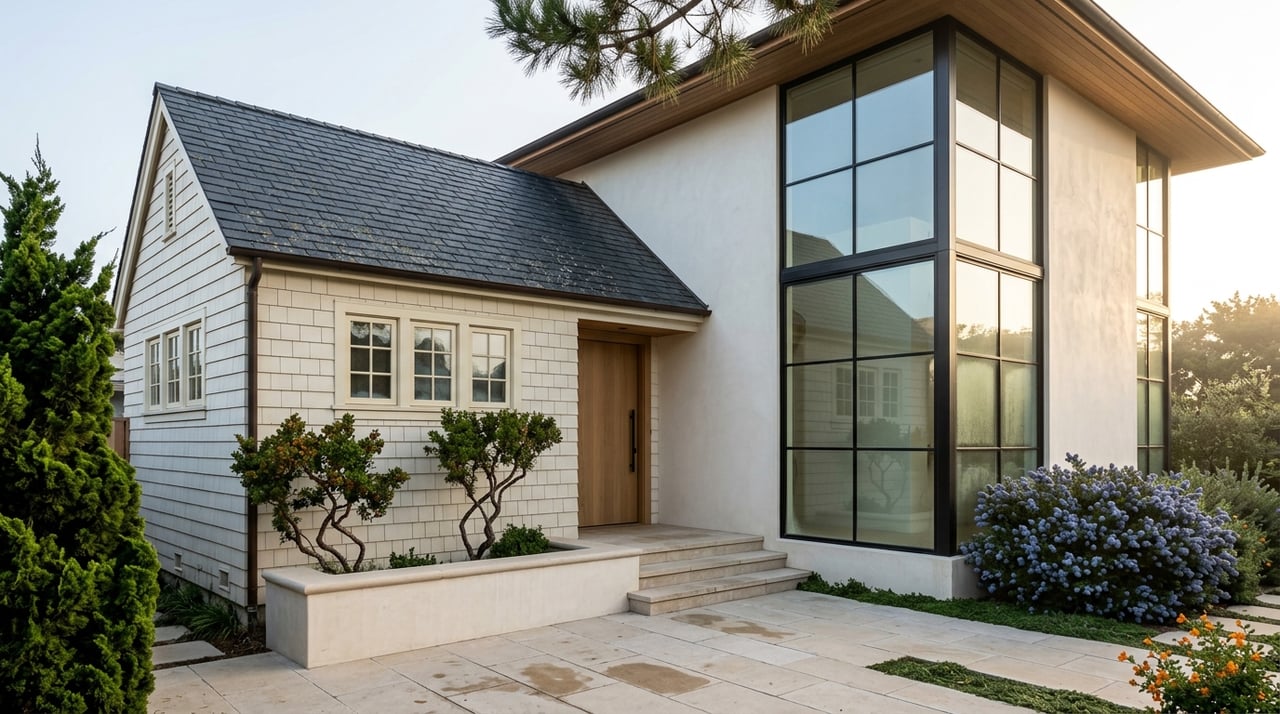
Choosing between a Carmel cottage and a contemporary home is not just about taste. In Carmel-by-the-Sea, architecture affects how you live, what you can remodel, and how much flexibility you may have down the road. If you are weighing charm against openness, or storybook character against modern comfort, this guide will help you compare both through a local lens. Let’s dive in.
Why style matters in Carmel
In Carmel-by-the-Sea, design is closely tied to local rules. The city sits entirely within the coastal zone, and its Local Coastal Program and Residential Design Guidelines shape most residential projects. That means your choice is not only personal, but also practical.
Carmel also places a high value on preserving its special character. So whether you love an older cottage or a cleaner-lined modern home, the right fit depends on both lifestyle and what the property can realistically support.
What defines a Carmel cottage
A Carmel cottage usually brings to mind the Fairy Tale homes associated with Hugh Comstock’s work from the 1920s. The style is known for details like rolled eaves, rounded doors, and asymmetrical stone chimneys. These homes help define the visual identity many buyers picture when they think of Carmel.
Older Carmel homes were often wood-framed and wood-clad, with brick or Carmel stone chimneys. That handcrafted look is part of the appeal, but it can also mean more upkeep over time. Materials and finishes in these homes often need to stay visually consistent with the property's original character.
For many buyers, a cottage offers something hard to recreate: a strong sense of place. If you want a home that feels rooted in Carmel’s history, this style often delivers that better than anything else.
What defines a contemporary home
Contemporary homes are also part of Carmel’s architectural story. The city’s historic context shows that Modern architecture became visible by 1950, with many Modern-style buildings built between 1940 and 1986. In other words, modern design is not foreign to Carmel.
These homes often feature plate-glass window walls, low or flat roof forms, terraces, decks, and a close relationship between the house and its setting. In daily living, that can translate to cleaner lines, larger glazing, and a more open interior flow.
That said, a contemporary home in Carmel is not a free-form design exercise. It still has to fit local expectations for scale, materials, and neighborhood compatibility through design review.
Compare daily living
Cottage living feel
A cottage often feels intimate, layered, and full of personality. Rooms may be smaller, ceiling lines may vary, and the layout may reflect the era in which the home was built rather than today’s open-plan preferences.
If you value cozy spaces, architectural detail, and a home that tells a story, that can be a major advantage. If you want large gathering areas or a more seamless indoor-outdoor flow, you may find some cottages feel more constrained.
Contemporary living feel
A contemporary home often prioritizes openness, light, and connection to the landscape. Larger windows, broader sightlines, and simpler room transitions can make the home feel bigger and more flexible.
For buyers who want easy entertaining, cleaner design, and spaces that support modern systems and finishes, this style may feel more aligned with everyday use. In Carmel, though, the home still has to respond carefully to lot shape, topography, and neighboring properties.
Lot size changes the decision
In Carmel, lot constraints matter as much as architecture. For lots of 4,000 square feet or less, the city allows a maximum floor area of 45 percent of lot size, and a typical 4,000 square foot lot has a base floor area of 1,800 square feet.
That can affect both cottages and contemporary homes. If you are hoping to expand, reconfigure, or build significant outdoor living areas, the numbers may shape your options more than style alone.
Site coverage is also broader than many buyers expect. Patios, walkways, driveways, decks, steps, decomposed granite, gravel, trash enclosures, and hot tubs all count as site coverage, so outdoor plans need to be considered early.
Privacy, light, and outdoor space
Carmel’s design guidelines emphasize privacy, views, and homes that sit naturally on the land. Stepped floor plans are encouraged so homes hug the topography, and driveways are expected to reduce visual impact.
This often supports a softer, more landscape-driven approach to privacy. Front fences require design review and are expected to be simple, hand-crafted, and allow filtered views into the property.
For a contemporary buyer, that matters because large areas of glass and more open forms can raise privacy and massing questions early in the design process. For a cottage buyer, mature landscaping and smaller openings may already create a more sheltered feel.
Maintenance is a real tradeoff
What to expect with cottages
Older cottages often need more preservation-minded maintenance. Wood-clad walls, traditional wood windows, and historic details may require more ongoing care than newer materials.
The city’s planning guidance also says unclad wood windows with external divided lights are the standard in town, while vinyl is not appropriate. So even routine replacement choices can become design decisions in Carmel.
What to expect with contemporary homes
A contemporary home may offer an easier path to lower-maintenance materials and newer systems, depending on the property. Metal windows may be considered when they suit a modern building, which can create more flexibility than you might find with an older cottage.
Newer homes may also be better aligned from the start with current efficiency requirements. California’s updated Energy Code took effect January 1, 2026, for newly constructed buildings, additions, and alterations, while many older homes improve performance through targeted retrofits.
Trees and site work matter more than you think
Carmel’s forest setting is a defining part of life here. The city describes itself as a village in a forest by the sea, and it has assessed more than 10,000 city trees.
That setting adds beauty, shade, and privacy, but it can also affect what you can change. Property owners may need permits to prune or remove limbs and trees, especially during construction, which is important if you are considering major site work or a more ambitious redesign.
Remodeling and rebuilding questions
Historic review can limit changes
If a home is on the Historic Inventory, exterior changes require historic review and must be consistent with the Secretary of the Interior’s Standards. The city also states that historic resources cannot be demolished.
Even if a home is not listed, houses more than 50 years old may need a historic evaluation before exterior alterations. That is one reason older cottages can come with more limits than buyers from other markets expect.
Bigger projects face more review
For larger residential work in the R-1 zone, Carmel uses a two-track design-study process. Track Two applies to new residences and additions of 10 percent or more, and it includes a public hearing, mailed notice to neighbors, and story poles.
If you are imagining a contemporary rebuild as a blank slate, this is an important reality check. The process can be thoughtful and achievable, but it is rarely simple.
Height and shape still control design
Carmel allows a maximum of two stories. Properties west of Carmelo Street in the Beach and Riparian Overlay District have an 18-foot height limit.
Setbacks also vary based on zoning, lot size, and lot shape. On smaller, sloped, or tree-filled sites, these rules can make design more complex than buyers initially assume.
Rental and future flexibility
If future use matters to you, be sure to factor in local rental rules. In the Single-Family Residential Zoning District, transient rentals may not be rented for fewer than 30 days.
That matters for second-home buyers who may be thinking about occasional income or long-term optionality. In Carmel, flexibility is shaped by city rules as much as by the house itself.
Which home fits you best?
A cottage may be right if you want:
- Distinctive character and historic charm
- A strong sense of Carmel identity
- Craft details and traditional materials
- A home that feels intimate and story-driven
- Long-term ownership with preservation in mind
A contemporary home may be right if you want:
- Cleaner lines and more open interior flow
- Larger glazing and stronger indoor-outdoor connection
- More adaptable living spaces
- An easier path to updated systems and efficiency
- A layout that may better support modern daily living
The real answer is property-specific
In Carmel-by-the-Sea, the best choice is rarely just cottage versus contemporary. It is also about lot size, tree constraints, height limits, historic status, site coverage, and the city’s design-review process.
A charming cottage may offer scarcity, authenticity, and a beautiful connection to Carmel’s past, but with fewer expansion options. A contemporary home may feel more flexible and easier to adapt, but it still has to work within Carmel’s coastal and design framework.
That is why I always recommend evaluating not just the home you see today, but also what the property can support tomorrow. If you want help comparing specific homes, remodeling potential, or long-term resale fit in Carmel, schedule a private consultation with Ryan Sherman Luxury Real Estate.
FAQs
Can I replace windows in a Carmel cottage?
- Usually yes, but the city reviews window materials, size, and placement. Wood divided-light windows are the local standard, and vinyl is not appropriate.
Can I build a taller contemporary home in Carmel-by-the-Sea?
- Carmel allows a maximum of two stories, and properties west of Carmelo Street in the Beach and Riparian Overlay District have an 18-foot height limit.
Can I expand an older cottage in Carmel?
- Possibly, but floor-area limits, site coverage, setbacks, tree constraints, and possible historic review can all affect what is feasible.
Can I use a Carmel single-family home as a short-term rental?
- In the Single-Family Residential Zoning District, transient rentals may not be rented for fewer than 30 days.
Does a contemporary rebuild in Carmel face design review?
- Yes. Larger projects may trigger Track Two design study, which can include a public hearing, neighbor mailings, and story poles.
