Love the look of Carmel’s cottages but not sure how to tell a Comstock from a Craftsman, or what that means for your remodel plans? You are not alone. In Carmel-by-the-Sea, style, history, and strict design rules all shape what you can buy and how you can personalize it. This guide helps you spot the main architectural styles, understand the local review culture, and plan smart due diligence so you can buy with confidence. Let’s dive in.
How to read Carmel architecture at a glance
Storybook cottages (Hugh Comstock influence)
- Visual cues: steep, irregular shingled roofs that mimic thatch, arched doors, small leaded or diamond-pane windows, rough stucco or shingle cladding, and stone chimneys. Massing is asymmetrical.
- Era: mainly 1920s to 1930s.
- Buyer notes: These homes are highly prized and may fall under historic review for exterior changes. Interiors are cozy and often compact, so layout changes can be limited.
Craftsman and bungalow
- Visual cues: wide front porches, tapered columns on piers, low-pitched gables, exposed rafter tails, and multi-pane uppers over single-pane lower window sashes.
- Era: early 1900s to 1930s.
- Buyer notes: Original woodwork and built-ins are sought after, but wood elements need close inspection for coastal rot and termites.
Spanish Colonial Revival and Mediterranean
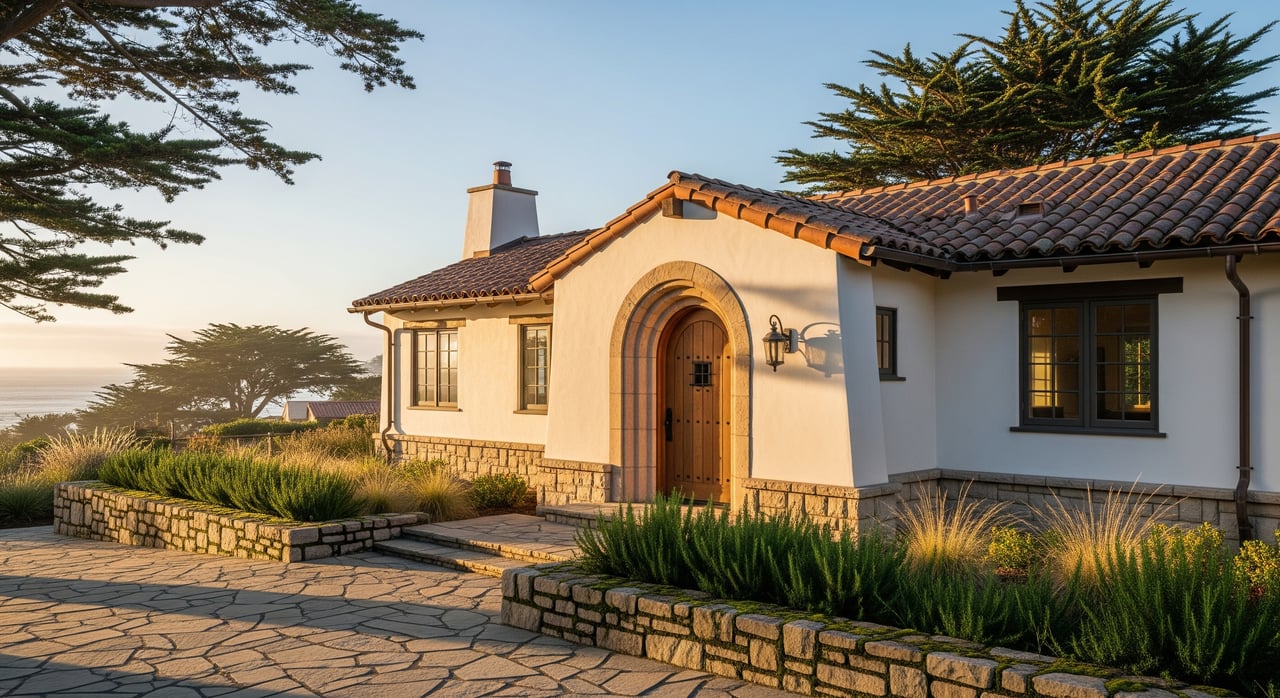
- Visual cues: smooth stucco walls, red clay tile roofs, arches, wrought-iron accents, and small courtyards.
- Era: 1910s to 1930s, with later revivals.
- Buyer notes: Tile roofs last a long time but are heavy and need proper support. Courtyards can trap moisture if drainage is not managed.
Tudor and English Revival
- Visual cues: steep gables, decorative half-timbering, stucco infill, tall narrow windows, and bold chimneys.
- Era: 1920s to 1930s.
- Buyer notes: Distinctive rooflines and chimneys often require specialized maintenance and periodic review for water intrusion.
Mid-century modern and contemporary
- Visual cues: horizontal lines, large view-facing glass, flat or low-pitched roofs, open plans, and site integration.
- Era: 1940s to 1970s for mid-century, plus newer custom builds.
- Buyer notes: Expect potential seismic and energy upgrades in older homes. Large single-pane windows can be inefficient.
Vernacular coastal cottages and custom builds
- Visual cues: eclectic blends and creative solutions adapted to small lots and topography. Non-standard foundations and narrow drives are common.
- Buyer notes: Character is high, but verify foundation type, garage access, and any unusual structural details.
What Carmel’s rules mean for your plans
Design review and historic preservation
- Exterior changes are closely reviewed to protect the village character. Window replacements, siding, roofing, and additions usually need permits and design review.
- If a property appears on a historic inventory or has landmark status, expect extra preservation steps. Interior work may be easier, but anything visible from outside draws scrutiny.
- Ask for the property’s permit history and speak with city planning or historic staff before you make offers that assume big exterior changes.
Coastal Zone and environmental permits
- Many parcels are within the Coastal Zone. Additions, bluff work, and some renovations may require a Coastal Development Permit.
- Bluff-top homes face tighter rules. Shore protection can be limited, and erosion studies may be needed.
- If you plan to expand or alter exterior elements near the shoreline, get clarity early on permit pathways and timelines.
Zoning, setbacks, and size limits
- Carmel’s code limits height, lot coverage, and floor area to preserve a cottage scale, especially near the village core.
- Small, irregular lots can make expansion difficult without variances, which are discretionary and not guaranteed.
- Before envisioning a second story or large addition, test your plan against setbacks and size limits.
Trees and landscaping
- Certain tree removals are regulated. Landscape changes that affect the streetscape or safety may need review.
- On vegetated parcels, wildfire fuel management standards can apply. Confirm expectations for defensible space.
Unpermitted work and disclosures
- Older homes often have undocumented additions. Sellers must disclose known issues, but you should still verify permit histories.
- Bringing unpermitted work up to code can add cost and time. Factor this into your offer strategy and schedule.
Condition issues to watch in Carmel homes
Seismic and foundations
- Many cottages sit on pier-and-beam or shallow foundations that need seismic retrofits. Look for foundation bolting, cripple wall bracing, and shear panels.
- Watch for settlement, sill plate rot, and tie-down issues. A structural engineer is a smart hire on older homes or any property you plan to alter.
Moisture and pests
- Fog and salt air accelerate wood decay and corrosion. Inspect subfloors, exterior sills, window sashes, and eaves for rot.
- Drainage is critical. Older homes may lack flashing, gutters, or proper site grading. A pest inspection for termites and dry rot is essential.
Roofing and chimneys
- Historic wood shakes look charming but may not meet modern fire standards and can be near end of life.
- Masonry chimneys can crack in seismic events and absorb water. Ask for flue liner checks and note any moisture staining.
Electrical, plumbing, and insulation
- Expect older systems like knob-and-tube wiring or limited-capacity panels. Galvanized or older plastic piping can need replacement.
- Many historic cottages have little insulation. Energy upgrades help, but exterior changes that alter appearance can face review.
- Heating may be basic in small homes. Plan for modern HVAC if comfort and efficiency matter to you.
Access, parking, and utilities
- Central Carmel lots may have small or no garages and tight driveways. Street parking can be limited.
- Verify sewer lateral condition, water service, meter locations, and any easements that affect use.
Renovation costs and feasibility
- Strict review, small lots, and historic character increase the complexity of additions.
- Budget for invisible upgrades, including seismic work, sewer laterals, panel upgrades, and insulation.
- Many buyers choose light-touch restoration and focused systems upgrades to preserve exterior charm while improving safety and comfort.
A buyer’s due diligence roadmap
Pre-offer research
- Confirm whether the property is in the Coastal Zone and whether a Coastal Development Permit could apply to your plans.
- Check if the home is listed in a historic inventory or otherwise subject to preservation review.
- Request complete permit history for additions, structural changes, and systems work.
- Ask about insurance history, current coverage, and any claim records.
- Verify connected utilities, sewer lateral status, water meter location, and any easements.
Inspection priorities
- General home inspection covering structure, roof, plumbing, electrical, and heating.
- Pest inspection for termites and dry rot.
- Structural engineer review for foundation and seismic needs, especially on older homes.
- Chimney and flue inspection.
- Moisture or mold assessment if there are signs of water intrusion.
- Geotechnical input for bluff or erosion exposure, and a fire hazard assessment if the site has vegetative risk.
- Lead paint or asbestos survey if you plan to renovate.
Red flags and cost drivers
- Unpermitted additions or missing documentation.
- Evidence of long-term moisture, fungal decay, or significant termite damage.
- Unbraced cripple walls, unbolted foundations, or undersized shear panels.
- Outdated knob-and-tube wiring or overloaded panels.
- Wood shake roofs that may not meet current fire code, or roofs near end of life.
- Bluff-edge homes with documented erosion or limited options for shore protection.
Transaction structure
- Include contingencies for inspections and permit verification.
- If you expect significant changes, speak with city planning and historic staff early.
- Reserve budget for behind-the-walls upgrades that support safety and long-term value.
Matching style to how you live
Space and flow
- Storybook and early cottages are intimate, with modest rooms and unique layouts. If you value openness, look for mid-century or well-planned contemporary homes.
- On compact lots, a long-term plan might favor high-quality interior upgrades over large additions.
Materials and maintenance
- Historic wood and stucco need steady care in a marine climate. Tile roofs last, but inspection and structural support are key.
- If you prefer low-maintenance exteriors, focus on homes with updated systems and recent envelope work.
Light, views, and comfort
- Mid-century and contemporary homes often have expansive windows toward views. Consider energy upgrades for glazing and insulation.
- Courtyards add charm, but pay attention to drainage and waterproofing details.
Next steps
You can buy confidently in Carmel when you pair an eye for style with a plan for permits, inspections, and maintenance. Identify the architecture you love, verify the rules that shape it, and build a realistic timeline and budget. With curated inspections and early conversations with planning and preservation staff, you protect both your enjoyment and your resale.
When you are ready to explore, connect for local guidance, private previews, and a due diligence plan tailored to your goals. For white-glove buyer representation on the Monterey Peninsula, reach out to Ryan Sherman Luxury Real Estate.
FAQs
What is a Comstock cottage in Carmel-by-the-Sea?
- A Comstock-influenced storybook cottage from the 1920s with steep shingled roofs, arched doors, and leaded windows, often subject to preservation review for exterior changes.
Do I need a Coastal Development Permit to remodel in Carmel?
- If your property is in the Coastal Zone and you plan exterior changes or additions, a Coastal Development Permit may be required, especially near bluffs or the shoreline.
How do small village lots affect expansion plans?
- Lot coverage, height limits, and setbacks restrict additions, and variances are discretionary, so many buyers focus on interior upgrades over major expansions.
Which inspections matter most for historic Carmel cottages?
- A general inspection, pest report, structural engineer review for seismic needs, and dedicated chimney and moisture checks are core due diligence steps.
Are tile roofs a good choice near the coast?
- Clay tile roofs are long-lived but heavy, so the roof structure must be adequate. Regular inspection and proper flashing are important for moisture control.
What insurance issues should I expect with coastal homes?
- Availability and cost can vary due to coastal exposure and historic construction. Engage insurers early to confirm homeowner, earthquake, and any flood needs.
